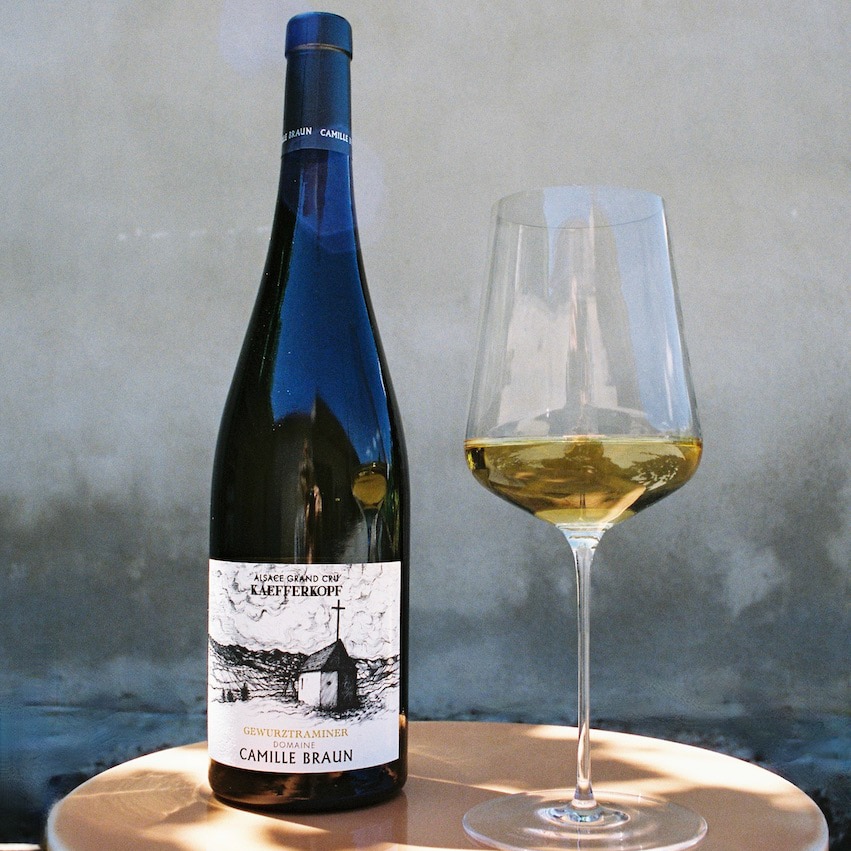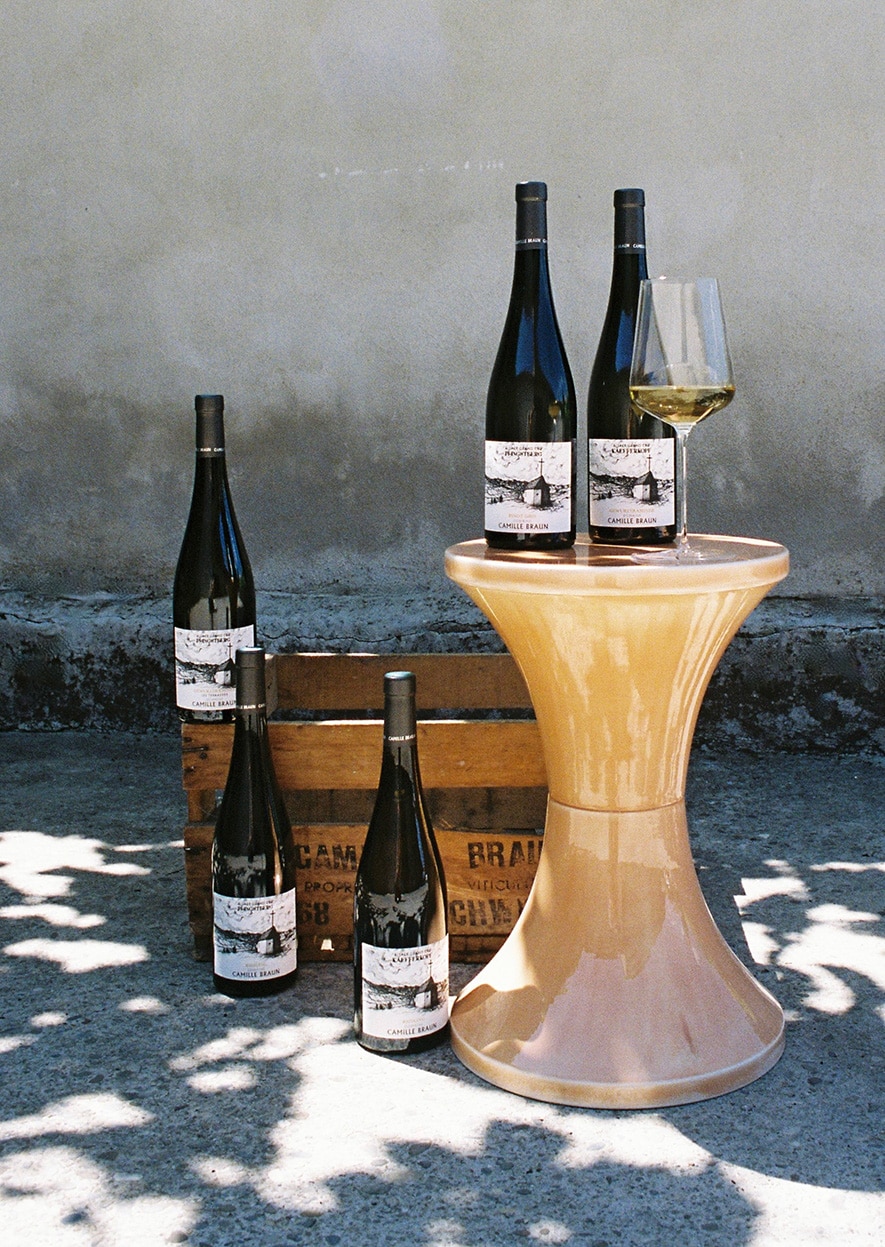
Kaefferkopf — Granit, energy, legacy
Kaefferkopf [ n, m, trad. ]: beetle head.
Far from Bollenberg, on the slopes of Ammerschwihr, another place teaches another grammar - Granite. The Great Cru Kaefferkopf, whose name appeared in 1338 in the archives of the abbey of Paris, is a land of memory. For a long time, he came into the appellation only in 1931, and it was only in XXIe He officially joined the Grand Crus d'Alsace. Its name refers to the curve of the hill, carpented, curved like the back of an insect heated by the sun.
Our plots are to the south, on Katzenthal. There, the vine turns eastward, welcoming the first light of day. The base is double : Turckheim granite with two micas, bright, porous, which lets spun water ; lower limestone, quiet, which holds and preserves. From this encounter a rare balance arises : the soil defends itself from excesses, neither washed up by rain, nor consumed by drought.
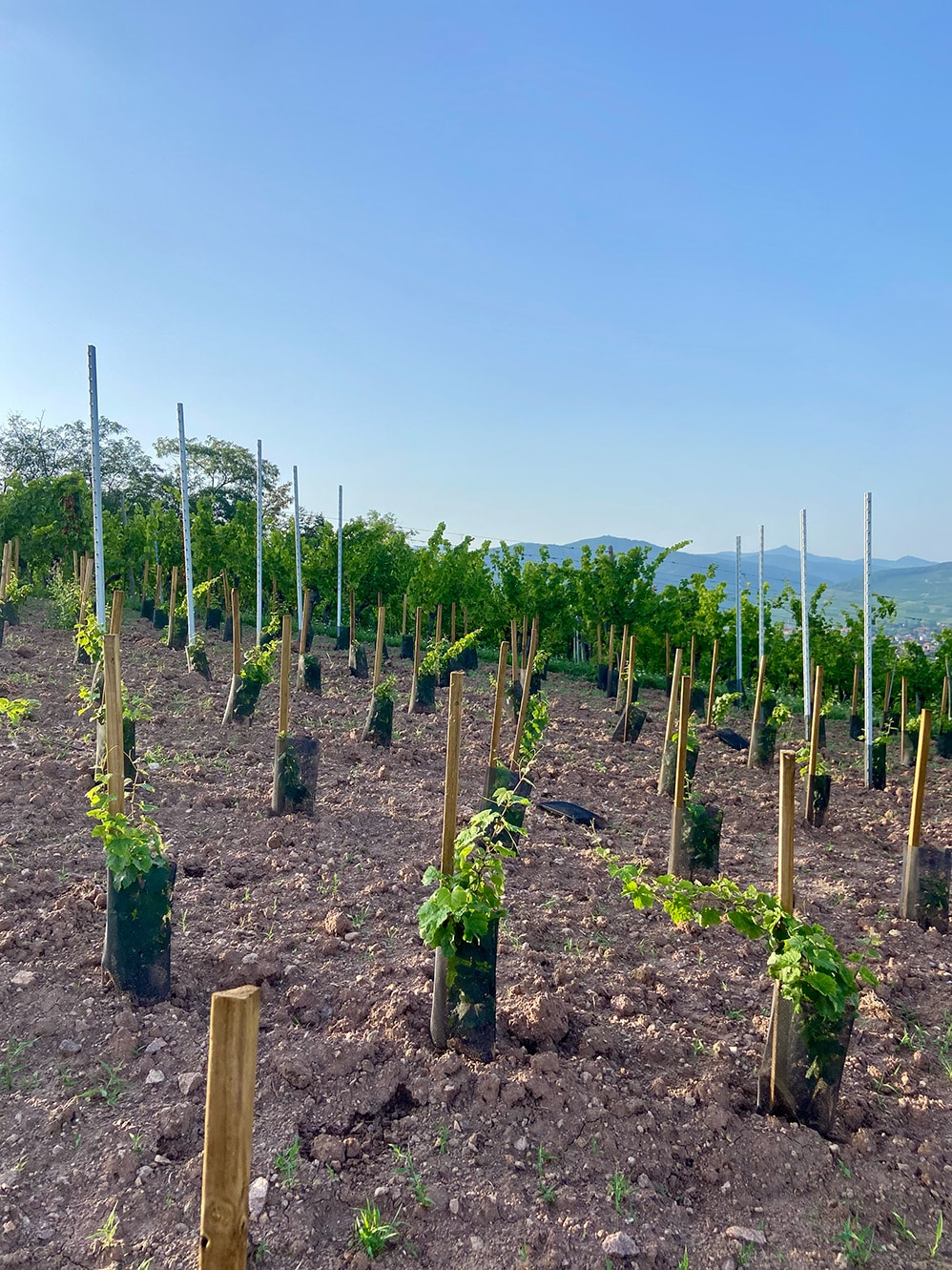
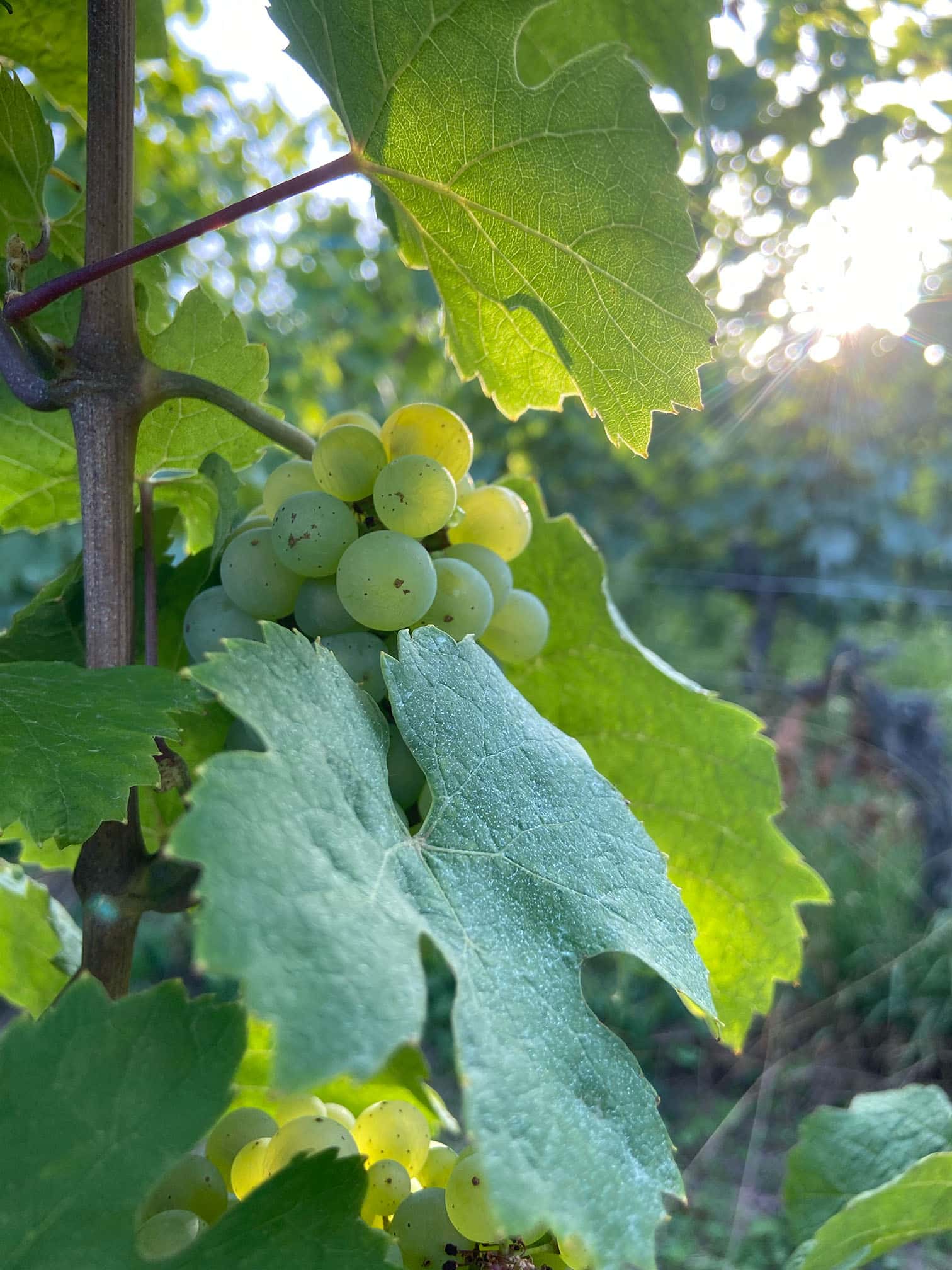
Protected from the west winds by the high rise of the Vosges, the hillside sometimes receives the warm and dry breath of the foehn, who came from theThere. This foreign breath sharpens maturity, amplifies aromas. Granite, solar, prints its brand in wine : bright flash, tense nerve, chiseled fergue. Always lenient, never heavy. But this piece of earth is not just a geology. It's also a legacy.
Marguerite's family, founder of the estate with Camille, was a long-time guardian of this hillside. By it, this terroir of Katzenthal has joined our history, become a gesture transmitted, a thread tense between generations. Cultivating this vine is to continue this bond, made of fidelity, attentive care and attachment to a place whose strength is imposed as much as it receives.