
PLACE GRAMMARY:
what each climate dictates
Every wine we raise is a phrase written from the earth. Not a statement, but a narrative — what the vine heard, what the rock whispered, what the wind carried. It is a grammar of the place, a syntax of light and soil, which we simply try to transcribe.
Our range follows this natural syntax, ordered by the reliefs and deep layers: limestone, sandstone, marnes and clays. It is organized as an initiatory path, by degrees and by nuances.
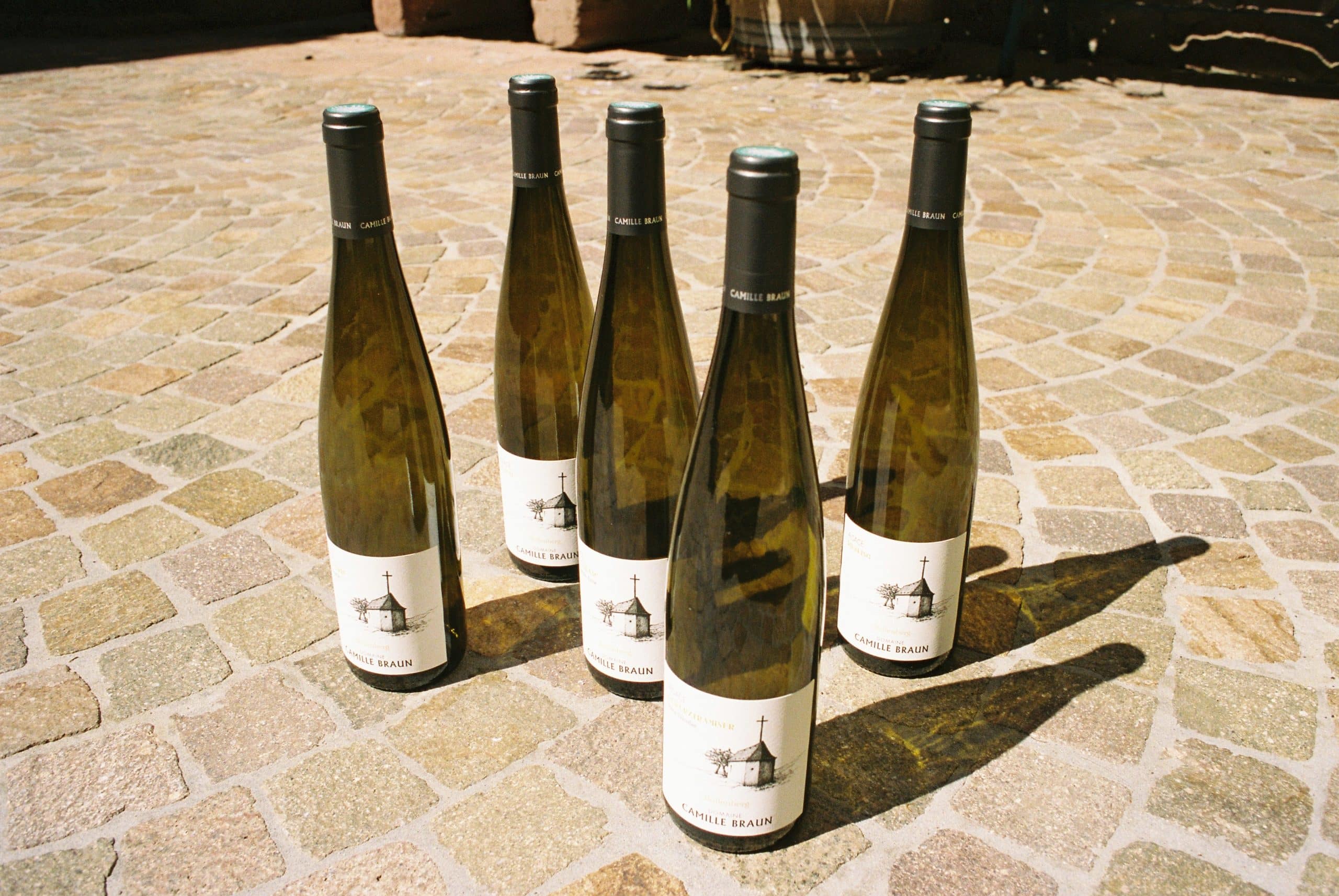
fruit wines
First come the fruit wines : from more discreet terroirs, they leave the grape variety its first freedom. Direct purity, immediate freshness, clear language as evidence.
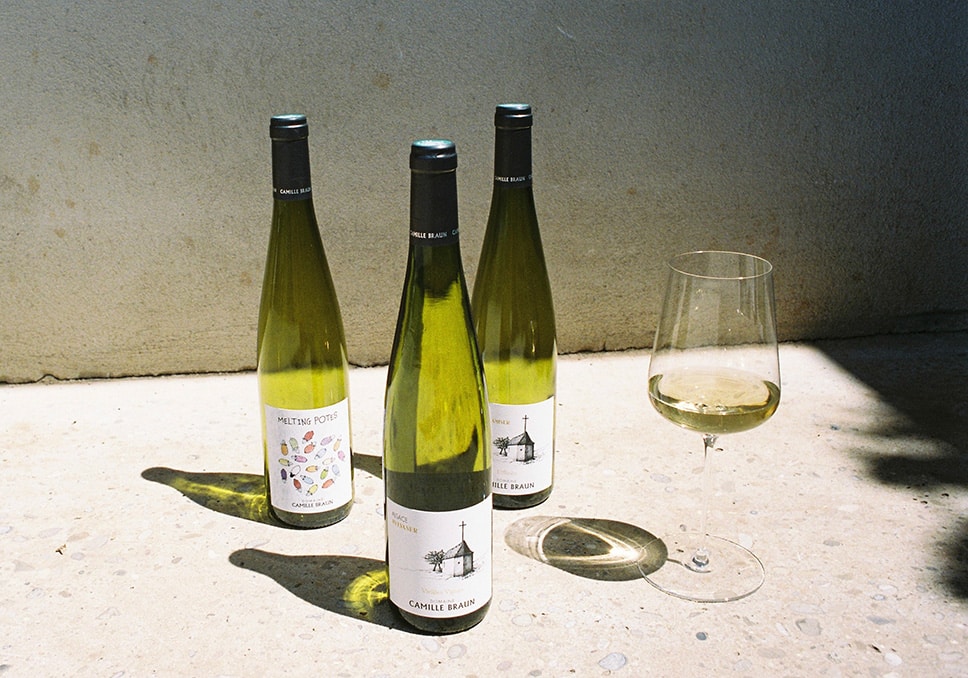
wines from Bollenberg Hill
Then raise the wines of Bollenberg : assemblages of the east side of the hillside, where the slope, wind and limestone combine their forces. The wine vibrates with a mineral echo, a tension contained, like the grave voice of a hill that can discipline itself.
LIEUX-DITS wines
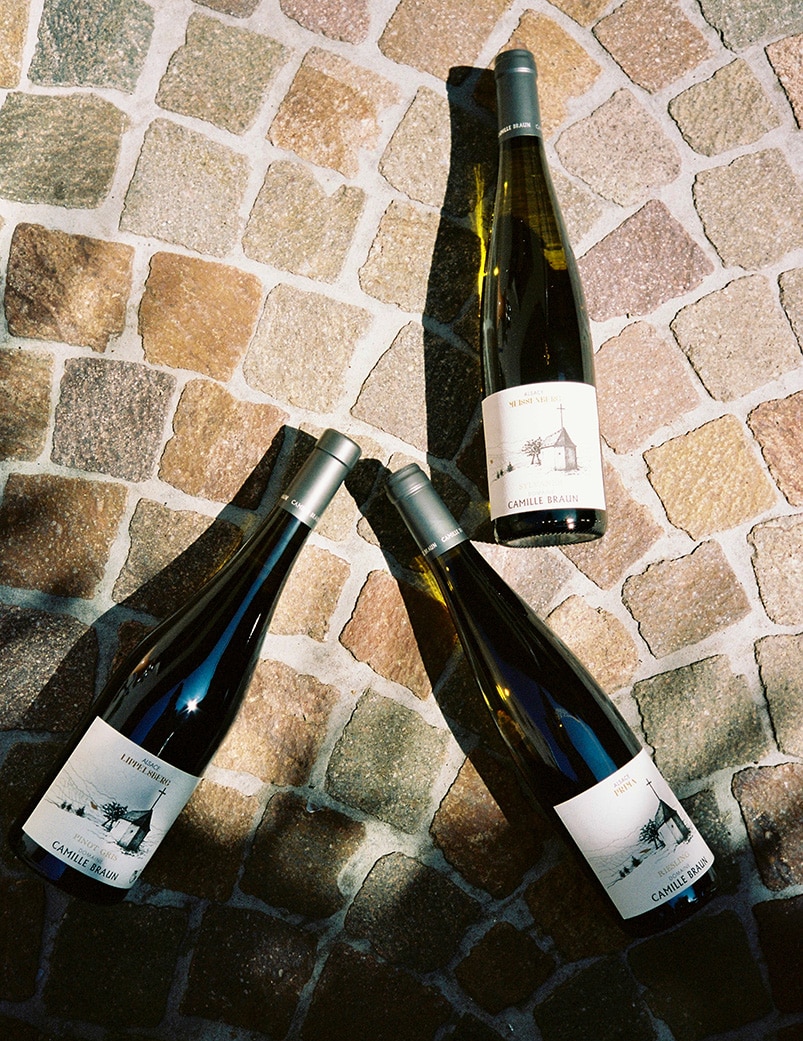
Then come the wines of places-Say it. Unique terroirs, sometimes secret, always inhabited. The Luft, the Lippelsberg, Meissenberg, etc. Each one reveals a unique facet of the landscape, as if the hills, by fragments, delivered their multiple voices. These are real climates : meeting of a slope and a wind, a depth of soil and water which slates there.
Their wines don't rush. They're moving in. Some breathe reserve and duration, others offer a wide and laid seat, others shine with a tactile, almost translucent finesse. All describe a nuance of time and earth, an intonation proper to the place.
Thus, each place draws a line of writing in the climate book. So many chapters that make up the mosaic : the intimate grammar of Orschwihr.
GREAT CRUS
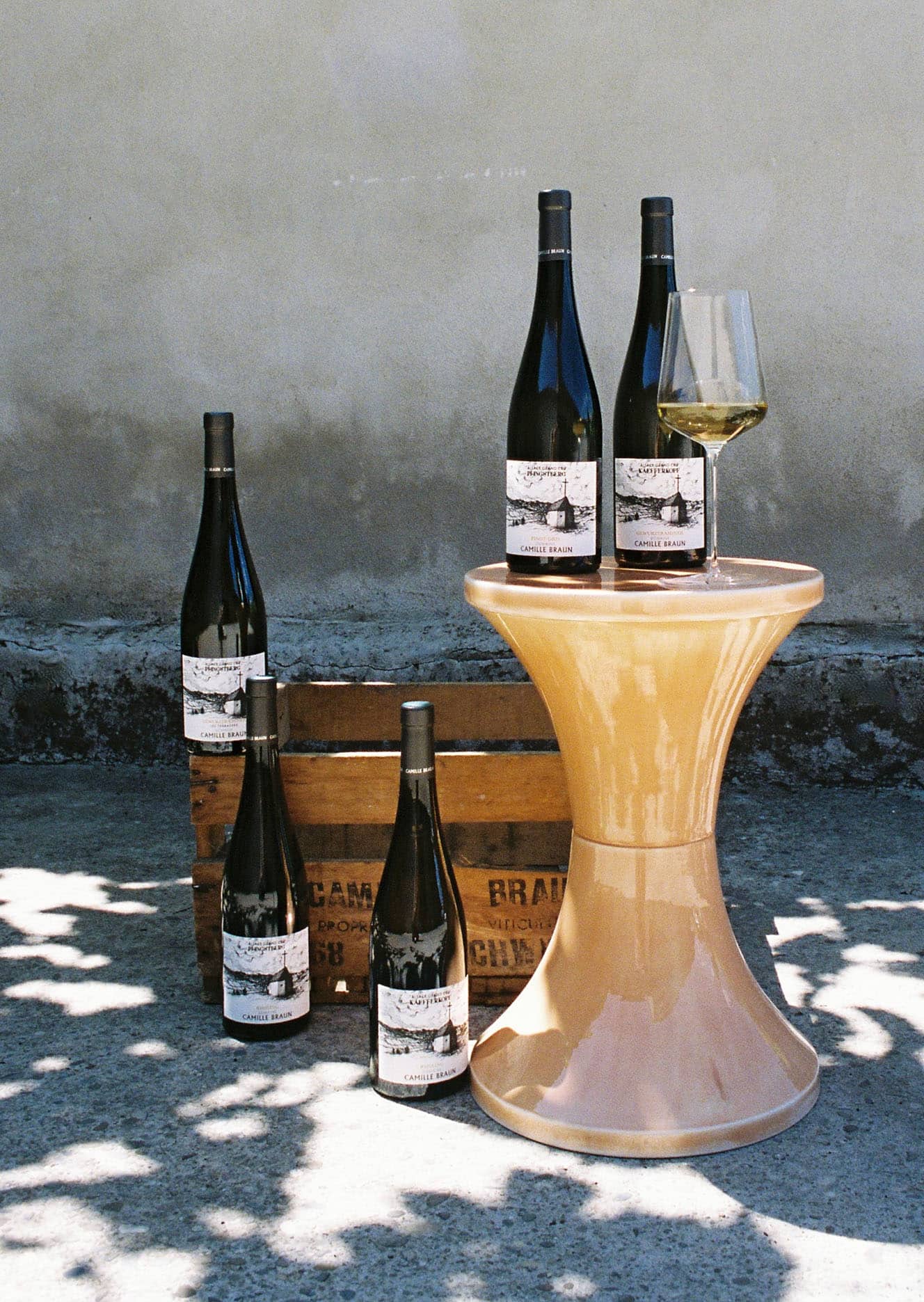
At the top is the ultimate degree: the Great Crus.
Rare, singular, detached from the common, they bear the mark of the chosen places.
Pfingstberg the opposites: complex balances.
Kaefferkopf, solar and granite, the last-born of the lineage of the great Alsatian crus.
Here, the vine reaches a form of fullness, it speaks in high language: it reveals not only a soil, but a compact memory, a promise of duration. Each bottle keeps the footprint of the place's eternity.
Cremants
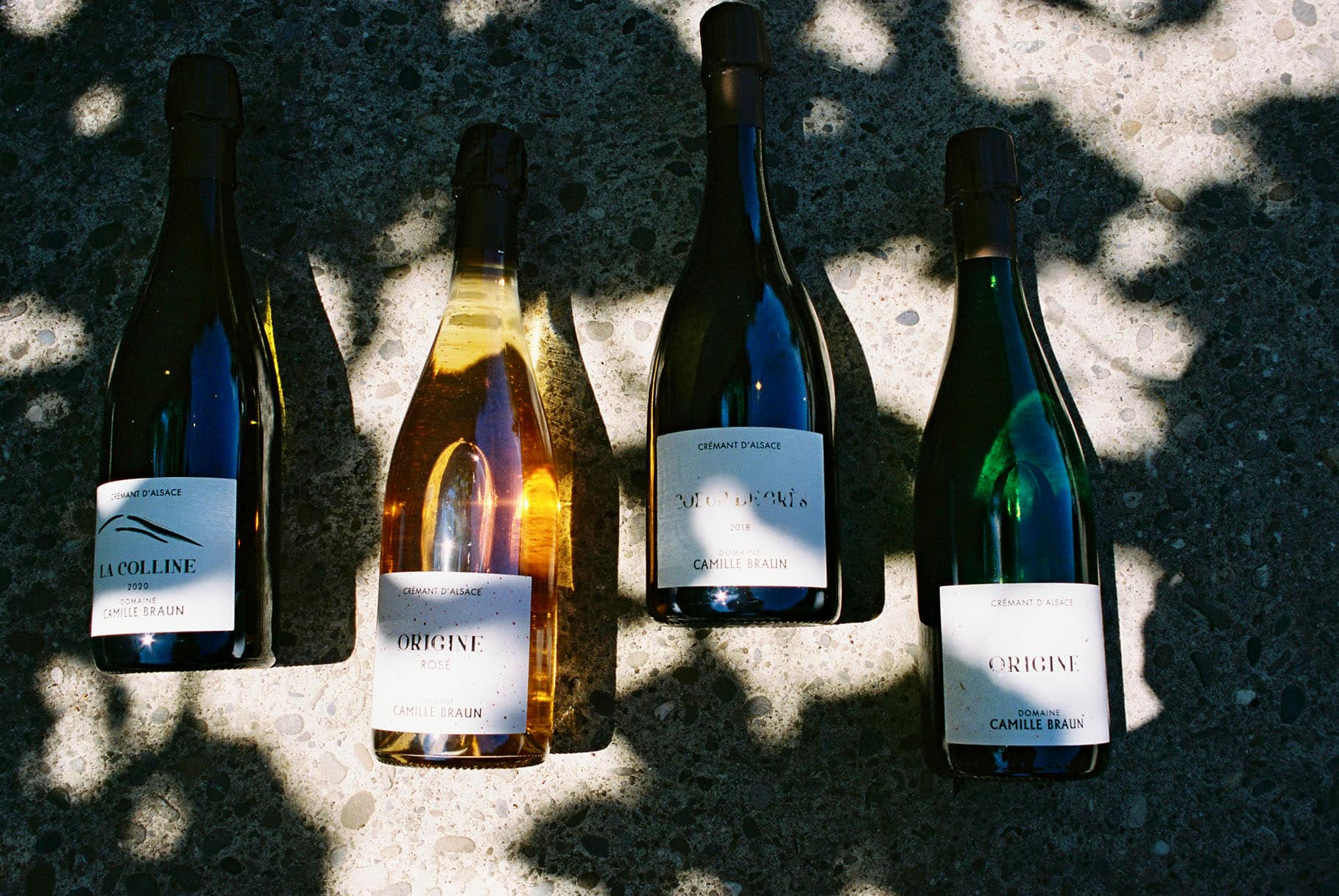
Our Cremants are born of the same respect of the living: to accompany rather than to compel. Slowness is not an obstacle, but an ally, polishing the wine over the long months on lees and slats. Here, the bubble is not an artifice, but a language: it raises the voice of the terroir, a fine punctuation that prolongs freshness and emphasizes salinity.
Before being cremant, each cuvée is a wine, designed for the table, to last, not for the ephemeral seduction a bubble. It is a straight wine, sincere, rooted in its place.
These cremants bear this evidence: effervescence is another grammar, a fair and patient way to say the terroir.
MACERATIONS:
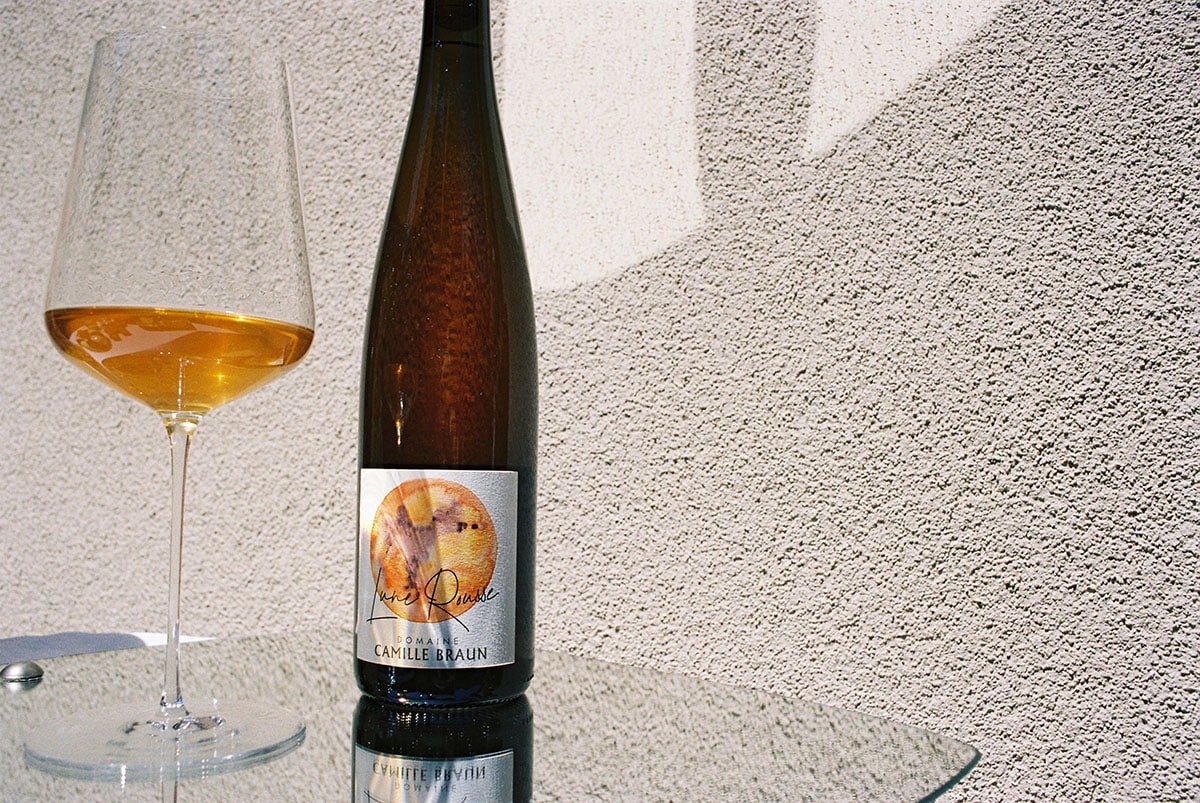
The other voice of the grape variety. With our maceration wines, it is the grape variety itself that reinvents itself. Fermentation on skin opens a new register, an enlarged aromatic, an unexpected language. This is no longer just the fruit we know, but another side of his memory, a depth that dialogues with texture and color. For the color here is not simple appearance: it becomes matter, interpretation, meaning.
These wines force us to re-learn what we thought we knew about a grape variety, to move our gaze, to push our markers. They also invite the imagination of agreements : with them, the tables cross other paths, the combinations widen, the kitchen opens up to a new poetry.
Thus, our maceration wines do not seek to shock, but to broaden the scope of the possible. They recall that a grape variety is multiple, that it can otherwise tell its place, and that the richness of taste always comes from this assumed plurality.