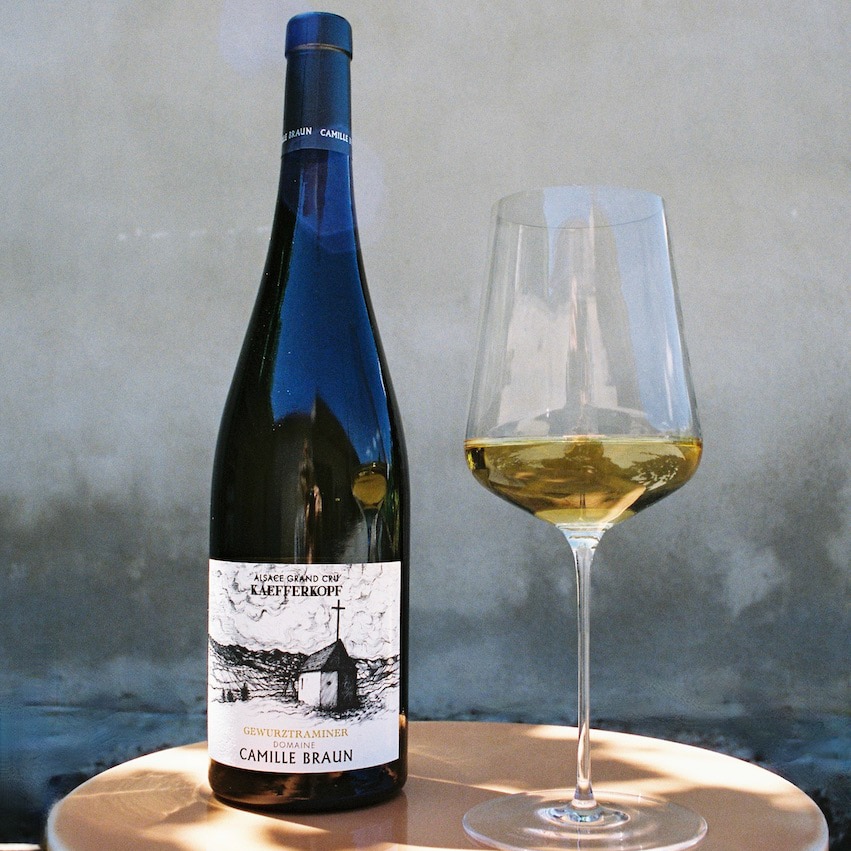
Grand Crus

At the top, the Grand Crus bear the mark of the chosen places: Pfingstberg, art of balance, and Kaefferkopf, solar and granite. Here, the vine speaks in high language: not only a soil, but a memory, and a promise of duration.
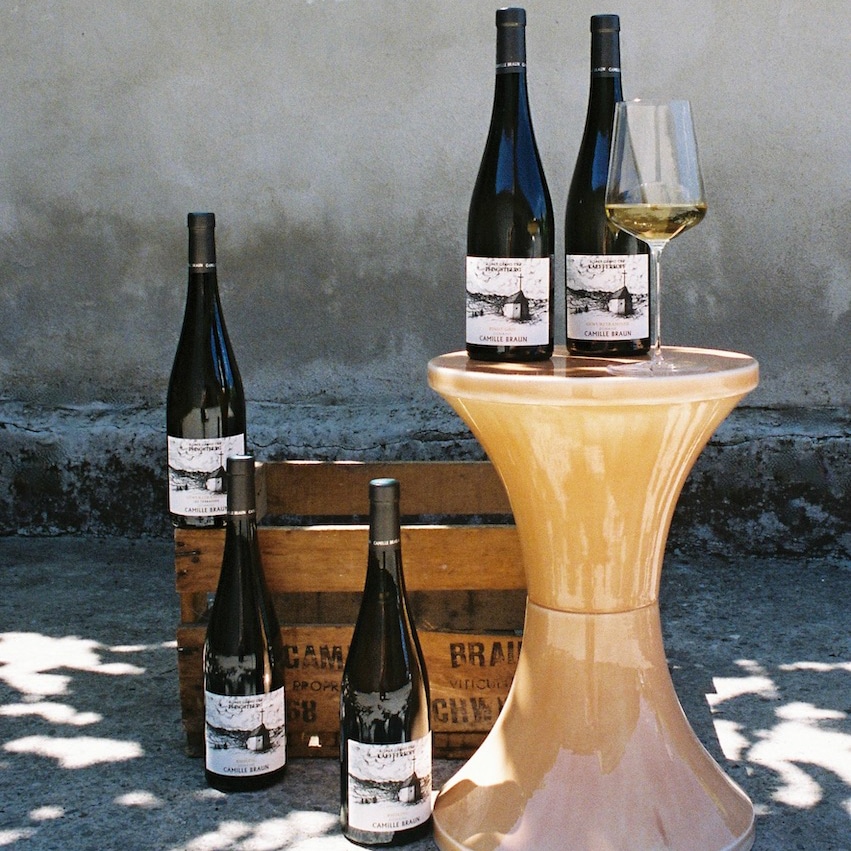
Grand Cru Pfingstberg Riesling
Surface: 64.38 ares
Year of planting: 1965, 2004 and 2016
Exposure: East
The riesling of the Pfingstberg is an elevation wine more than demonstration. The nose combines lemon, white flowers, fine herbs and hot stone after rain. Nothing screams, everything suggests. In the mouth, verticality is necessary: acidity extended but polished, fine material that stretches without fail, discreetly insistent length. The Muschelkalk and the sandstones play their role of shock absorbers: the effaced extremes, remain only the clear line, the salinity held, the energy contained. A Grand Cru of outfit, cut for time more than for now.
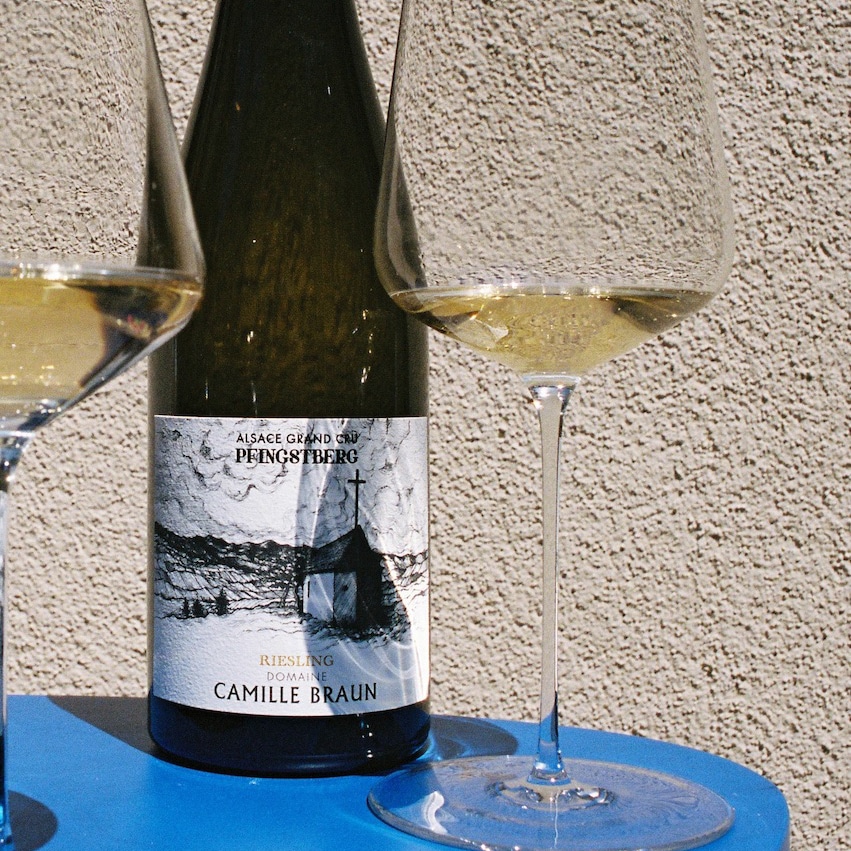
Grand Cru Pfingstberg Pinot Gris
Surface: 65.12 ares
Year of planting: 1981
Exposure: East
Here, the pinot gris leaves the simple greed to enter the shade. The nose opens onto ripe yellow fruits, a light honey, a smoky note, placed on a stony bottom that signs the hillside. In the mouth, the flesh arrives first, generous, then the frame reveals itself: the marno-calcaro-grey soil allows the wine to flourish without breaking off, with a wide but held texture. The finish, straight and dry, is carried by a discreet but tenacious minerality that makes you want to come back. A jack pinot of hillside, of large terroir, revealed by its dry vinification: deep, precise, cut as much for the guard as for beautiful tables.
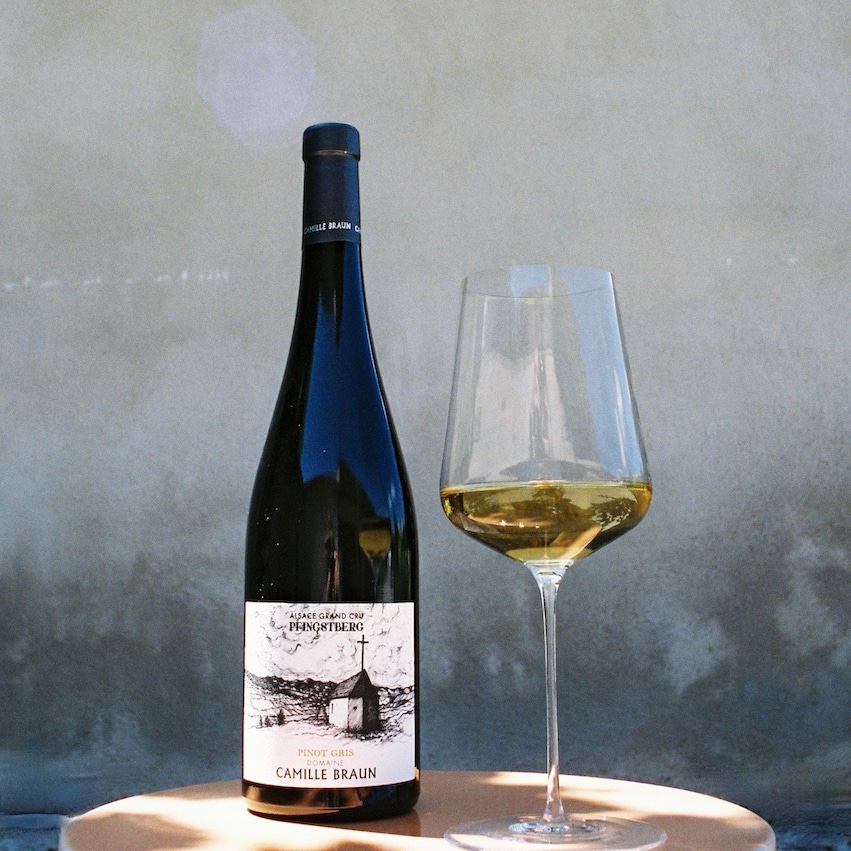
Grand Cru Pfingstberg Gewurztraminer
Surface: 51.2 acres
Exposure: East
The Pfingstberg gewurztraminer plays in a haute couture register. The nose is rich – pink, spices, exotic fruits, citrus zest – but the first sensation remains finesse. On the palate, sugar and aromatic wealth are carried by an architecture of limestone and sandstone that refuses heavyness. The wine spreads in fan, then tightens gently on a clear, almost saline finish, raised with a slight citrus bitterness. A Grand Cru that shows that a gewurztraminer can be both large and perfectly held.
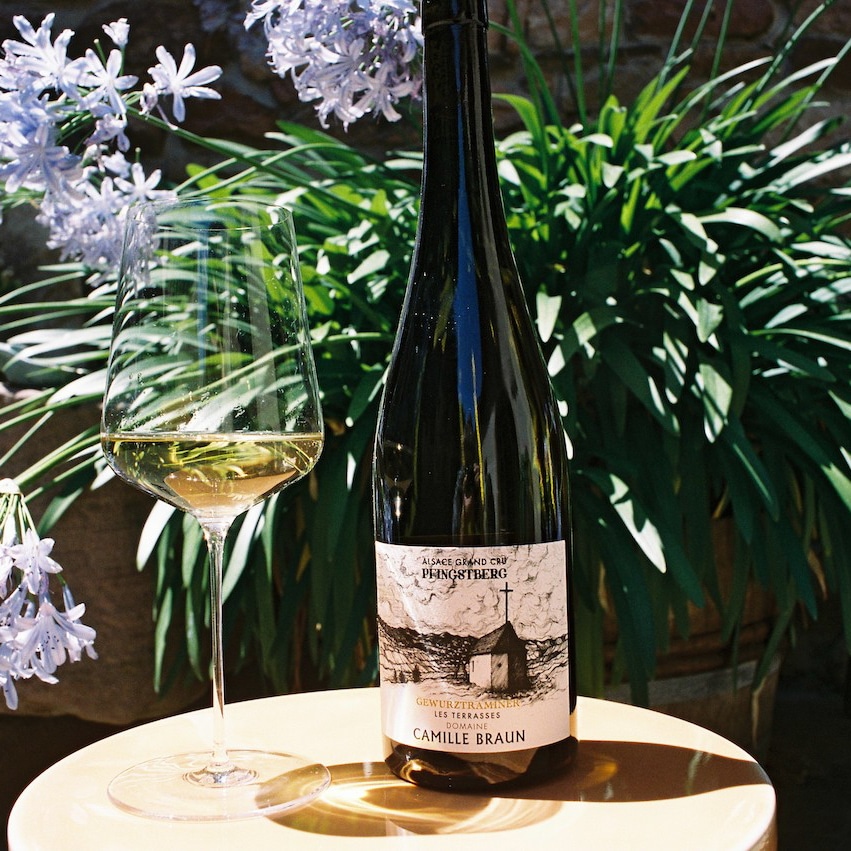
Grand Cru Pfingstberg Gewurztraminer
« The Terraces »
Surface: 33,49 ares
Year of planting: 1953
Exposure: East
Old vines on terraces, repeated gesture since 1953: here, everything speaks of patience. The nose is of great complexity: old pink, spices, candied fruits, light incense, nothing smoky. In the palate, the depth of the roots and the structure of the hill give a wine at the same time large and tightened, with a tight weft that carries the richness without letting it salanguir. The finish is very long, marked by noble bitter, almost tonic, and discreet salinity. It is a height gewurztraminer, more in lace than in velvet.
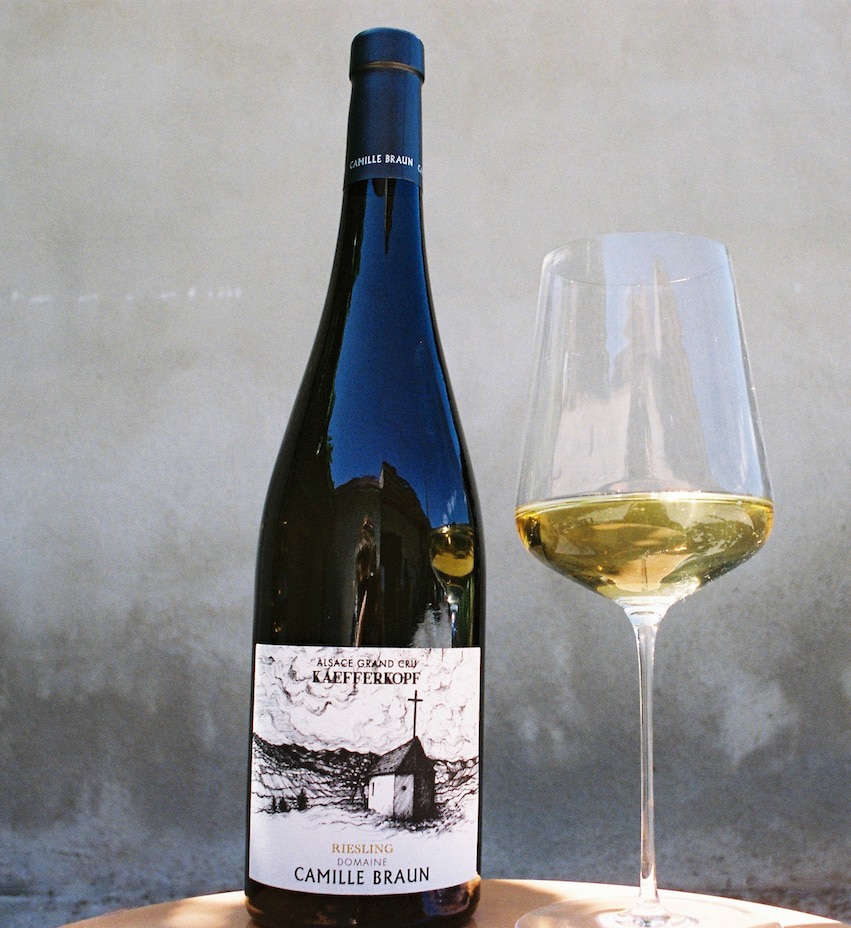
Grand Cru Kaefferkopf Riesling
Surface: 34,89 ares
Year of planting: 1980
Exposure: East
On granite, the riesling changes its tone: sharper, more vibrant. The nose mixes lemon, grapefruit, fine herbs and a clear stony imprint, almost smoky. In the palate, tension is at the heart of the subject: lively acidity, but integrated, long-line structure, salivating finish, both salty and bitter in the right sense of the word. Granite brings this incisive, luminous side, which lengthens the wine without thickening. A mastered Grand Cru of energy, both precise and expressive.
Grand Cru Kaefferkopf Gewurztraminer
Surface: 30 acres
Year of planting: 1983, 1984 and 2006
Exposure: East
Small surface, big personality. The gewurztraminer on granite shows a face more tense than on limestone. On the nose, the variety palette is well there – pink, exotic fruits, spices – but emphasized with a freshness of citrus and a warm stone side. In the mouth, the aromatic richness is held by an acid spine more marked than the average of gewurztraminers. The mouth remains full, but the granite keeps it moving, with a dry finish, long, slightly salty. A Kaefferkopf of character, which reconciles depth and drinkability.